Planning a trip to Europe? If you’re a UK passport holder, there’s a new travel requirement you’ll want to know about before booking your next getaway. ETIAS for UK Citizens is set to change the way many UK travellers visit Europe, but there’s still plenty of confusion about what it means and when it will actually be introduced.
At Euro Holidays, we want to make planning your European adventure as simple as possible. The good news is that ETIAS is not yet operational, so there’s currently no application to complete and no fee to pay. In this guide, we’ll explain everything you need to know about ETIAS, including who will need it, when it’s expected to start, how the application process will work, and what UK travellers should know before their next European holiday.
Understanding ETIAS and How It Works
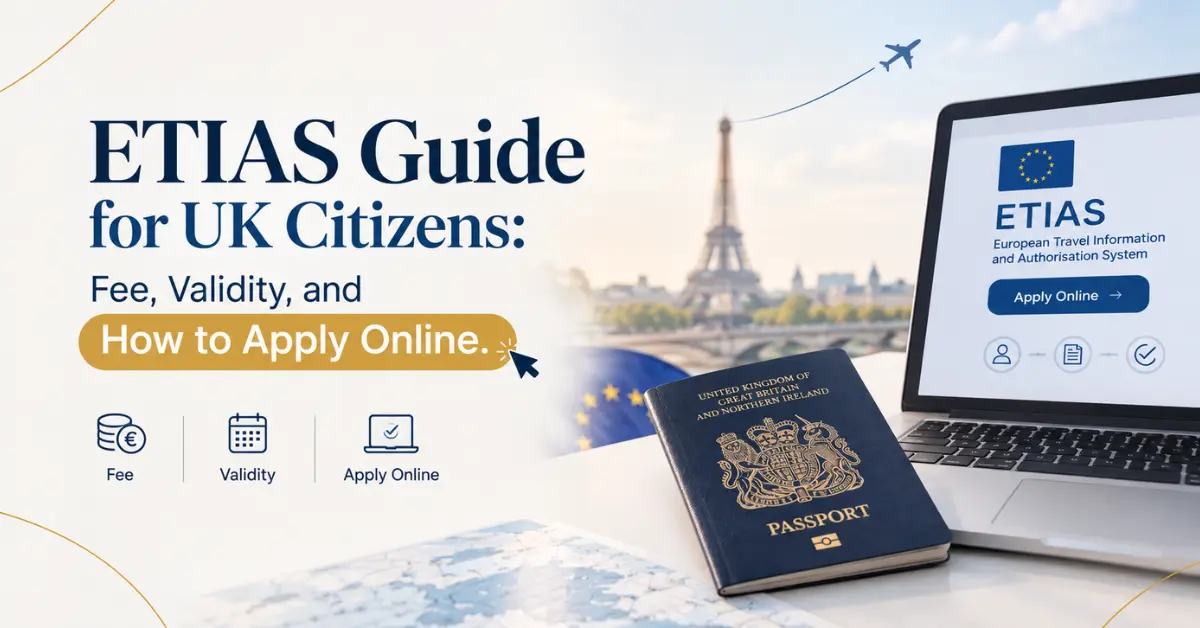
ETIAS, short for the European Travel Information and Authorisation System, is an online travel screening requirement for eligible visitors. It is designed to check travellers before they arrive in Europe and is different from a traditional visa.
Once it launches, most visa-exempt travellers, including UK citizens, will need to complete a short online form before travelling to certain European countries.
Think of it as similar in spirit to the US ESTA system:
- You answer questions about yourself and your trip
- You pay a small fee
- You receive an electronic authorization linked to your passport
- It does not grant residence rights
- It does not replace a visa for nationalities that require one
- It does not guarantee entry; border officers still make the final call
Do UK Citizens Need ETIAS for Europe?
Yes. Once the system launches, most British passport holders travelling to participating European countries for short stays, holidays, business trips, or family visits will need an approved ETIAS.
Here are a few important things to keep in mind:
- ETIAS eligibility is determined by the nationality shown on your passport rather than the country where you currently live.
- It applies to UK citizens, not simply UK residents.
- Non-UK nationals living in the UK are assessed on their own passport, not their UK residence status.
- ETIAS applies to the Schengen Area and a small number of additional participating countries, not to the UK itself.
- Travellers who already hold a valid residence permit or long-stay visa for a European country are generally exempt, since ETIAS is designed for short, visa-free stays.
- If you have dual nationality or are travelling with an unusual travel document, make sure to review the requirements that apply to your situation before the launch date.
How Much Does ETIAS for UK Citizens Cost?
The ETIAS fee is €20 per person for eligible travellers aged 18 to 70. This is a one-time payment expected to cover the full validity period of the ETIAS travel authorization, rather than being charged per trip.
| Applicant | ETIAS Fee |
| Adults aged 18–70 | €20 |
| Children under 18 | No fee |
| Adults aged 70+ | No fee |
Travellers who are exempt from the fee will still need to complete an ETIAS application if they’re required to hold travel authorization; the exemption applies to the payment, not the application itself.
How Long Is ETIAS Valid, and How Many Trips Can You Take?
An approved ETIAS travel authorization will be valid for up to three years, or until the passport used in the application expires, whichever comes first.
If you renew, replace, or change the passport linked to your ETIAS, you’ll generally need to apply for a new travel authorization. During its validity, ETIAS is expected to allow eligible travellers to make multiple trips to participating European countries, subject to the usual entry and stay requirements.
Does ETIAS Change the 90/180-Day Rule?
No, ETIAS does not change the Schengen 90/180-day rule for UK citizens.
- UK passport holders can stay in the Schengen Area for a maximum of 90 days within any rolling 180-day period for short stays.
- The 90-day limit applies to the Schengen Area as a whole, not per country. For example, 40 days in France + 30 days in Italy = 70 days used within the same 180-day period.
- ETIAS does not extend your stay or provide additional days in Europe; it’s simply an additional pre-travel screening requirement for eligible visa-exempt travellers.
- Existing Schengen short-stay rules will continue to apply.
Application Requirements and Process for ETIAS UK Citizens
The exact application form will be confirmed at launch, but applicants are expected to provide:
- A valid passport or travel document
- Basic personal and contact details
- Passport issue and expiry dates
- Occupation and, where required, education details
- First planned country of entry
- Answers to security and background questions
- A payment method, where applicable
How to Apply for ETIAS: A Complete Guide
Once ETIAS launches, the process is expected to be straightforward:
- Visit the official EU ETIAS website
- Have your passport and personal details ready
- Complete the online application form
- Answer the required security questions
- Check your information carefully
- Pay the applicable fee
- Submit your application
- Wait for the decision by email
Most applications are expected to be processed automatically, often within minutes, though some may take longer if additional checks are required.
Important: There is currently no downloadable PDF application form, appointment, or biometric step confirmed for ETIAS. Be cautious of third-party websites asking for payment or personal information before the system officially launches.
Do You Need ETIAS or a Schengen Visa?
ETIAS and a Schengen visa are different requirements. ETIAS is an online travel authorization for visa-exempt travelers, including UK citizens, visiting participating European countries for short stays. A Schengen visa is required for nationals of countries that need a visa to enter the Schengen Area.
ETIAS is completed online with basic passport and personal details, while a Schengen visa usually requires additional documents such as travel insurance for Europe, proof of funds, and travel plans. ETIAS does not replace a Schengen visa. If you live in the UK but hold a passport from a visa-required country, your nationality determines which requirement applies, not your UK residence.
Common ETIAS Mistakes for UK Travellers Should Avoid
- Entering passport details incorrectly, especially the number or expiry date
- Applying with a passport that’s close to expiry
- Using an unofficial website instead of the official EU ETIAS portal
- Confusing ETIAS with a Schengen visa
- Misunderstanding the 90/180-day rule and overstaying without realizing it
- Assuming an approved ETIAS guarantees entry, border officers still decide
ETIAS for UK Citizens with Euro Holidays
At Euro Holidays, we know how confusing changing European travel requirements can be. While ETIAS isn’t live yet, we’re happy to help UK travellers understand what it will mean for their trips, alongside guidance on Schengen visas for those who need one.
Once applications open, they’ll need to go directly through the official EU system rather than a third party. In the meantime, if you’re planning a European trip and want clarity on visa requirements, our team is here to help with accurate, up-to-date information.
Frequently Asked Questions
Do UK citizens need ETIAS?
Yes, once operational, for short stays in participating European countries.
Can I apply for ETIAS now?
No, it isn’t operational, and no applications are being accepted anywhere.
When does ETIAS start for UK citizens?
No confirmed date. A late-2026 target has been dropped from the official site; the EU will announce a specific date closer to launch.
How much does it cost?
€20 per applicant, with exemptions for under-18s and over-70s.